
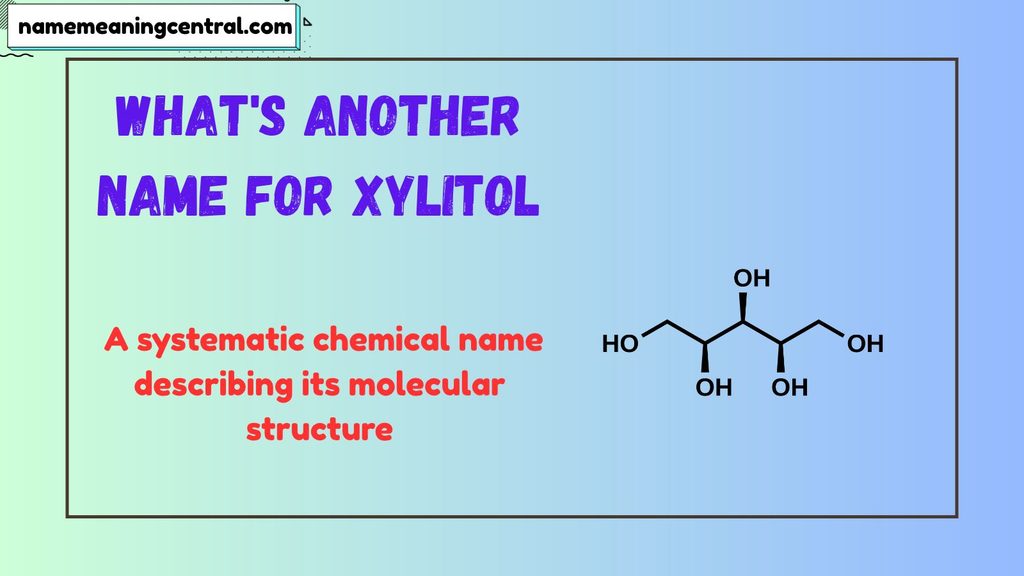
If you have seen xylitol listed on a food label, toothpaste package, or sugar-free product, you may wonder what else it is called. Xylitol is a sugar alcohol used as a sweetener in many everyday products. It has several alternative names, chemical identifiers, and labeling terms that can help you recognize it on ingredient lists.
The most common alternative name for xylitol is birch sugar, although this name does not describe every source used to produce it.
You may also see it listed simply as xylitol, a sugar alcohol, or a specific chemical name in scientific references. Understanding these terms makes it easier to compare products and identify sweeteners in foods, chewing gum, oral care products, and medicines.
What Is What’s Another Name for Xylitol?
The most familiar alternative name for xylitol is birch sugar. This name comes from the fact that xylitol can be produced using plant materials such as birch wood. However, commercial xylitol can also come from other plant sources.
Here are the main names and terms associated with xylitol:
- Birch sugar: A common alternative name used in some countries and product descriptions.
- Xylitol: The standard ingredient name found on most food and personal care labels.
- Xylite: A less common historical or commercial term associated with xylitol.
- Pentane-1,2,3,4,5-pentol: A systematic chemical name describing its molecular structure.
- Xylitol sweetener: A descriptive term used on packaging and in product information.
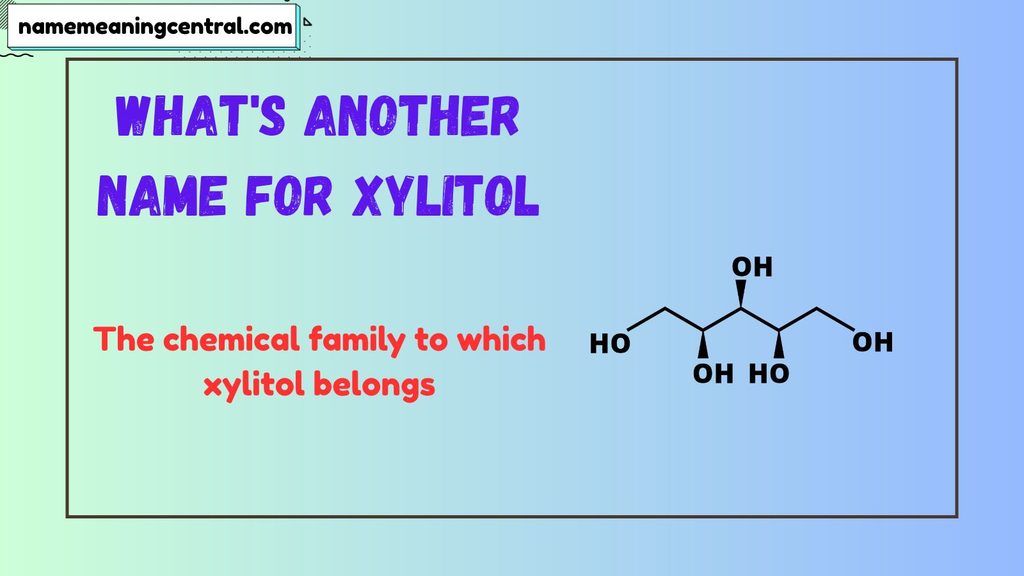
- Sugar alcohol: The chemical family to which xylitol belongs.
- Polyol: A scientific term for the broader group of sugar alcohols.
- E967: The European food additive number assigned to xylitol.
- INS 967: An international food additive identification number used in some labeling systems.
- Wood sugar alcohol: A descriptive phrase related to some traditional production sources.
These terms do not all mean exactly the same thing. Some are alternative names, some are chemical descriptions, and others identify the ingredient by its food additive classification.
If you are checking an ingredient list, the simplest approach is to look for the word xylitol. The name birch sugar may also appear in product descriptions, but it is not a guarantee that the sweetener came from birch trees.
Common Names for Xylitol on Food Labels
Xylitol is used in a variety of sugar-free foods. Recognizing the different ways it may be described can help you understand what you are buying.
Common label terms include:
- Xylitol: The clearest and most widely recognized ingredient name.
- Birch sugar: A consumer-friendly name sometimes used in marketing.
- E967: A food additive number that identifies xylitol in the European numbering system.
- INS 967: An international numbering designation for the ingredient.
- Sugar alcohol: A category name that may appear in nutrition information.
- Polyol: A technical term that may appear in nutritional or scientific material.
- Sugar-free sweetener: A broad product description that may include xylitol.
- Bulk sweetener: A functional description of sweeteners used to replace sugar.
- Granulated xylitol: A description of its physical form.
- Powdered xylitol: A description of finely ground xylitol.
- Crystalline xylitol: A description referring to its crystal-like form.
- Xylitol blend: A term that may describe a mixture containing xylitol and other ingredients.
Not every term in this list is an official synonym. For example, sugar alcohol describes a category rather than a single substance, while granulated xylitol describes the form of the ingredient.
Always read the complete ingredient list if you need to know whether a product contains xylitol or other sweeteners.
Chemical and Scientific Names for Xylitol
Xylitol has a specific chemical structure that distinguishes it from ordinary table sugar and other sweeteners. Scientific references may use its systematic name, molecular formula, or chemical classification instead of a familiar consumer name.
Here are useful scientific terms related to xylitol:
- Pentane-1,2,3,4,5-pentol: A systematic name describing the five-carbon structure and five hydroxyl groups.
- Xylitol: The accepted common chemical name.
- C5H12O5: The molecular formula of xylitol.
- Sugar alcohol: Its broad chemical classification.
- Polyol: Another term for the family of compounds to which it belongs.
- Pentitol: A class of sugar alcohols with five carbon atoms.
- Five-carbon sugar alcohol: A plain-language description of its chemical structure.
- Hydrogenated pentose: A description connected to the chemical relationship between xylitol and five-carbon sugars.
- Xylulose-related polyol: A descriptive reference to its relationship with the sugar xylulose.
- Crystalline polyol: A description of xylitol in its solid crystalline form.
These terms are useful in chemistry, food science, and technical product documentation. However, they should not all be treated as exact synonyms.
For example, pentitol describes a broader chemical class, while xylitol refers to one specific compound within that class. Xylulose is a related sugar, but it is not another name for xylitol.
If you need to identify xylitol for a scientific or ingredient-labeling purpose, use the exact name rather than relying on a broad chemical category.
Is Birch Sugar the Same as Xylitol?
Yes. Birch sugar is a common name for xylitol, particularly in consumer product descriptions. The two terms generally refer to the same sweetening compound.
The name comes from one traditional source of raw material. Manufacturers can produce xylitol from plant materials containing suitable carbohydrates, including certain wood sources. Modern production methods may also use other plant-derived materials.
A few important points can help clear up confusion:
- Same sweetener: Birch sugar and xylitol generally refer to the same compound.
- Different from table sugar: Table sugar is sucrose, while xylitol is a sugar alcohol.
- Not always made from birch: The name does not prove which raw material a manufacturer used.
- Similar appearance: Both can look like white crystalline granules.
- Different chemical structure: Xylitol has a different molecular structure from sucrose.
- Different digestive effects: Xylitol may cause gas, bloating, or diarrhea when consumed in large amounts.
- Different uses: Xylitol is common in sugar-free gum, mints, and some oral care products.
The term birch sugar can be helpful when shopping, but the full product label provides more reliable information about the ingredients.
Other Sweeteners Often Confused With Xylitol
Some sweeteners perform similar functions to xylitol, but they are not alternative names for the same ingredient. They have different chemical structures, sweetness levels, and effects on digestion.
Here are some common alternatives:
- Erythritol: A sugar alcohol used in many low-sugar foods.
- Sorbitol: A sugar alcohol found in sugar-free gum, candies, and some oral care products.
- Mannitol: A sugar alcohol used in certain foods and pharmaceutical products.
- Maltitol: A sweetener commonly found in sugar-free chocolate and confectionery.
- Isomalt: A sugar alcohol used in hard candies and other confectionery.
- Lactitol: A sugar alcohol used in some reduced-sugar products.
- Allulose: A low-calorie sugar that is chemically different from xylitol.
- Stevia: A sweetener derived from compounds found in the stevia plant.
- Sucralose: A high-intensity sweetener used in many reduced-sugar products.
- Aspartame: A high-intensity sweetener used in selected foods and beverages.
- Saccharin: An artificial high-intensity sweetener.
- Monk fruit sweetener: A sweetener made using compounds extracted from monk fruit.
- Glucose: A simple sugar that differs from xylitol in structure and metabolism.
- Fructose: A naturally occurring sugar found in fruits and other foods.
- Sucrose: Ordinary table sugar, made from glucose and fructose.
These sweeteners are not interchangeable in every recipe or product. They differ in sweetness, texture, calories, and how the body processes them.
If you are avoiding xylitol for a particular reason, check the ingredient list carefully rather than choosing a product based only on the phrase sugar-free.
What Products Contain Xylitol?
Xylitol appears in many products because it provides sweetness without being ordinary table sugar. It can also be useful in oral care formulations.
Common product categories include:
- Sugar-free chewing gum: Xylitol may be used to sweeten gum.
- Sugar-free mints: Some breath mints contain xylitol.
- Hard candies: It may replace some or all of the sugar in certain candies.
- Toothpaste: Some formulas use xylitol as a sweetening ingredient.
- Mouthwash: Certain oral care products include xylitol.
- Dental products: Some products designed for oral care use it as a sweetener.
- Sugar-free lozenges: Xylitol may be included in selected formulations.
- Reduced-sugar baked goods: Some recipes use it to replace part of the sugar.
- Low-sugar desserts: It can sweeten selected puddings, desserts, and other foods.
- Powdered sweeteners: Xylitol is sold as a standalone sweetener for home use.
- Sugar-free drink mixes: Some formulations include xylitol or other sweeteners.
- Certain medicines: It may be used as an ingredient in some chewable or flavored formulations.
Not all products in these categories contain xylitol. Manufacturers use different sweeteners depending on the product’s purpose, cost, taste, and formulation.
Check the ingredients instead of assuming that a product contains xylitol because it is labeled sugar-free.
Why Is Xylitol Used as a Sweetener?
Xylitol is popular because it offers sweetness and can serve as a replacement for some of the sugar used in food products.
Here are several reasons manufacturers and consumers may choose it:
- Sweet taste: Xylitol tastes similar to sugar.
- Sugar replacement: It can replace sucrose in certain foods and recipes.
- Lower calorie content than sugar: Xylitol provides fewer calories per gram than sucrose, although it is not calorie-free.
- Dental applications: Xylitol is used in some oral care products and sugar-free chewing gums.
- Cooling sensation: It can create a mild cooling effect as it dissolves in the mouth.
- Crystalline texture: Its solid form makes it useful in some products designed to resemble granulated sugar.
- Sugar-free formulations: It can sweeten products marketed as sugar-free.
- Versatile applications: It can be used in selected foods, medicines, and personal care products.
Its properties make it useful, but that does not mean every person should consume it in unlimited amounts. The amount used and the individual’s tolerance both matter.
Xylitol may also cause digestive discomfort, particularly when someone consumes a large quantity in a short period.
Xylitol vs. Sugar: What Is the Difference?
Xylitol and table sugar can look alike, but they differ in their chemistry and nutritional properties.
| Feature | Xylitol | Table Sugar |
|---|---|---|
| Common name | Birch sugar | Granulated sugar |
| Chemical type | Sugar alcohol | Sucrose |
| Molecular formula | C5H12O5 | C12H22O11 |
| Sweetness | Similar to sugar | Reference point for sweetness |
| Calories | About 2.4 calories per gram in many nutrition references | About 4 calories per gram |
| Dental effects | Does not feed cavity-causing bacteria in the same way as sugar | Can contribute to tooth decay |
| Digestive effects | May cause gas or diarrhea | Large amounts may also cause digestive discomfort |
| Common uses | Sugar-free gum, mints, selected foods | Baking, cooking, drinks, and desserts |
Xylitol may work well as a sugar replacement in certain products, but it does not behave exactly like sugar in every recipe. Baking results can vary because sugar contributes more than sweetness. It also affects browning, moisture, and texture.
Another important difference is that xylitol can cause gastrointestinal symptoms in some people. If you are trying it for the first time, a small amount may be easier to tolerate than a large serving.
Is Xylitol Natural or Artificial?
Xylitol occurs naturally in small amounts in certain fruits, vegetables, and other plant materials. Commercial products, however, generally use xylitol produced through manufacturing processes that extract or convert suitable plant-derived raw materials.
This means the word natural does not tell you everything about a product’s production method.
Consider these points:
- Natural occurrence: Small amounts of xylitol occur in some plant foods.
- Commercial production: Manufacturers commonly produce it from plant-derived raw materials.
- Processed ingredient: Commercial xylitol undergoes processing before it is sold.
- Plant source: The starting material can vary by manufacturer.
- Product labeling: Marketing terms may describe the source or intended use, but the ingredient list identifies the sweetener.
The term birch sugar may suggest that every product is made directly from birch trees, but that is not necessarily true.
If the raw material matters to you, check the manufacturer’s information or contact the company directly.
Is Xylitol Safe to Consume?
Xylitol is used in many foods and oral care products, and many people can consume moderate amounts without serious problems. However, individual tolerance varies.
The most common concern is digestive discomfort. Because xylitol is a sugar alcohol, it may cause symptoms when a person consumes more than their digestive system can comfortably handle.
Possible effects include:
- Gas
- Bloating
- Abdominal discomfort
- Loose stools
- Diarrhea
The amount that causes symptoms differs from person to person. Some people tolerate small quantities well, while others experience discomfort after eating relatively little.
A few practical precautions can help:
- Read serving sizes and ingredient labels.
- Avoid consuming large amounts at once.
- Pay attention to digestive symptoms.
- Ask a healthcare professional for guidance if you have specific dietary concerns.
- Check with a veterinarian before using products containing xylitol around pets.
Important: Xylitol is highly toxic to dogs. Even a relatively small amount can cause a dangerous drop in blood sugar, and larger exposures may lead to liver injury. Keep xylitol-containing gum, candy, toothpaste, and sweetener packets away from dogs. If a dog eats a product containing xylitol, contact a veterinarian or animal poison service immediately. Do not wait for symptoms to appear.
Human safety information should never be used to judge whether a product is safe for a pet.
How to Identify Xylitol in an Ingredient List
If your goal is to avoid or find xylitol, checking the label is the most reliable starting point.
Follow these simple steps:
- Read the ingredients: Look for the exact word xylitol.
- Check alternative descriptions: Birch sugar may be used in product descriptions or marketing.
- Look for additive numbers: E967 is the European food additive number for xylitol.
- Review sugar-free products: Gum, mints, and candies are common places to find it.
- Do not rely on front-label claims: The words sugar-free or low sugar do not identify which sweetener is used.
- Check the full formulation: A product may contain several sweeteners at once.
- Contact the manufacturer: Ask about ingredients or raw material sources if the label does not provide enough detail.
Remember that terms such as polyol and sugar alcohol refer to broader categories. They do not prove that a product contains xylitol specifically.
If you are avoiding xylitol because of a medical concern, dietary restriction, or pet safety issue, do not rely on a vague product description alone.
How to Choose an Alternative to Xylitol
If you cannot find xylitol or prefer not to use it, the right substitute depends on what you want to make.
Consider these options:
- For baking: Erythritol or a suitable baking sweetener blend may work in some recipes.
- For drinks: Stevia or sucralose can provide sweetness in small amounts.
- For chewing gum: Look for products made with a different sweetener and check the full ingredient list.
- For sugar-free candy: Erythritol, isomalt, or maltitol may be used, depending on the product.
- For oral care: Choose a toothpaste or mouthwash based on its overall formulation and intended purpose.
- For reduced-sugar desserts: Allulose or a suitable sweetener blend may work in selected recipes.
Keep in mind that these alternatives have different properties. Some are much sweeter than sugar, while others provide bulk and texture. Certain sugar alcohols can also cause digestive symptoms.
If you are replacing xylitol in a recipe, consider whether you need sweetness alone or also need the ingredient to provide volume, moisture, or structure.
FAQs:
What is the most common alternative name for xylitol?
The most common alternative name is birch sugar. Xylitol is also described as a sugar alcohol or polyol, but those are category terms rather than exact synonyms.
Is birch sugar the same as regular sugar?
No. Birch sugar usually refers to xylitol, while regular table sugar is sucrose. They have different chemical structures, calorie contents, and effects on the body.
Is E967 another name for xylitol?
Yes. E967 is the European food additive number assigned to xylitol. It is an identification code rather than a traditional name.
Is xylitol the same as erythritol?
No. Both are sugar alcohols, but they are different compounds. They can differ in sweetness, calories, digestive tolerance, and performance in food products.
Can xylitol appear under a different name on food labels?
It may be described as birch sugar in some product information, while E967 may appear in European ingredient labeling. However, the word xylitol remains the clearest name to look for.
Does xylitol contain sugar?
Xylitol is a sugar alcohol, not a conventional sugar such as sucrose. It provides sweetness and calories, but its chemical structure and effects differ from those of ordinary sugar.
Is xylitol safe for dogs?
No. Xylitol can be highly toxic to dogs and may cause a rapid drop in blood sugar or liver injury. Keep products containing it out of reach, and contact a veterinarian immediately if a dog may have swallowed any.
Is xylitol better than sugar?
It depends on your needs. Xylitol contains fewer calories per gram than table sugar and is used in some dental products, but it can cause digestive discomfort. The best choice depends on your health goals, tolerance, and intended use.
Conclusion:
The most familiar alternative name for xylitol is birch sugar. You may also encounter terms such as E967, INS 967, polyol, and sugar alcohol, although these terms serve different purposes and are not all exact synonyms.
If you are checking food labels, the word xylitol is the clearest identifier. If you are comparing sweeteners, remember that erythritol, sorbitol, and other sugar alcohols are related ingredients, not different names for the same substance.
Choose products based on their full ingredient lists and your intended use. Most importantly, keep xylitol-containing products away from dogs because the sweetener can cause life-threatening poisoning.

I am Naqash Ayub, a passionate content creator dedicated to exploring the meanings, origins, and stories behind names through my website, NameMeaningCentral.com. My mission is to make every name meaningful by sharing insightful, engaging, and thoughtfully crafted content that helps people discover the beauty and significance hidden within every name.